Institutional continuity

Built to keep working

The best campus mobility work does not end with a final report. It becomes part of how an institution communicates, governs, funds, manages, and improves mobility over time.

These examples show how similar work has lived on after the planning process — as public-facing programs, campus mobility frameworks, and institutional strategies.

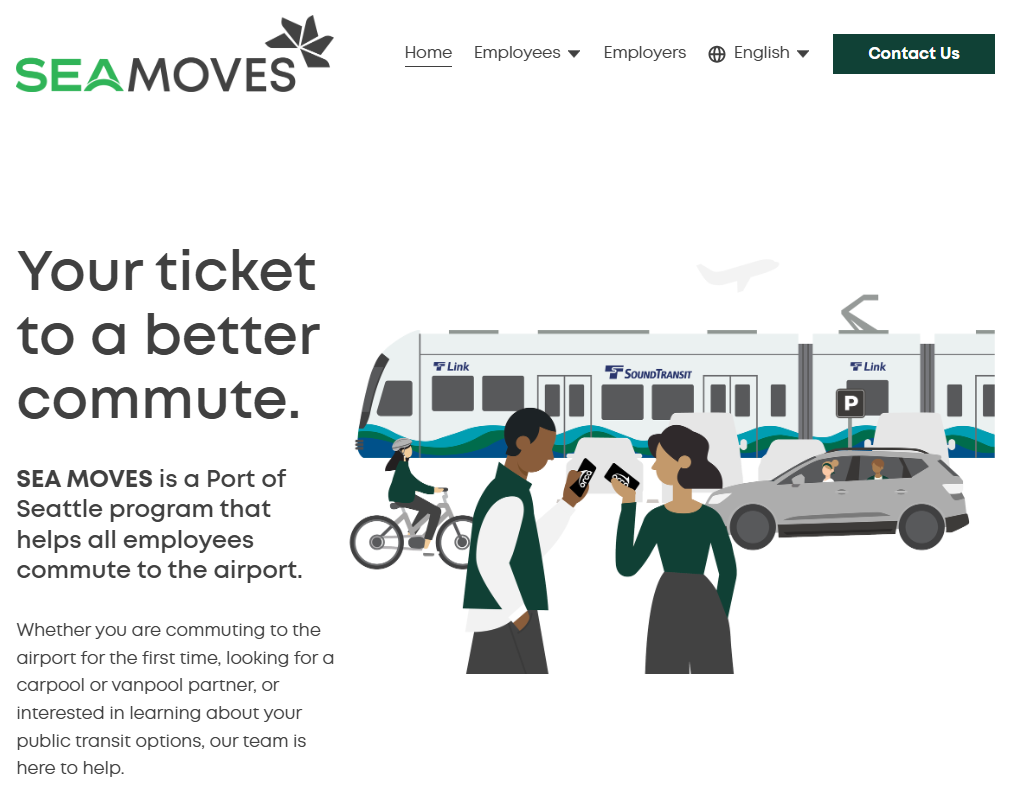
SEA Moves public commute program website

SEA Moves

A commute program with a public identity.

SEA Moves is a Port of Seattle program that helps airport employees find their best commute options. The public site presents the program as a visible, ongoing service for workers, with staff support, commute information, events, and help finding transit, carpool, and vanpool options.

Why it matters. Nunes-Ueno Consulting led the planning for the employee transportation program at Seattle-Tacoma International Airport. The plan was formally adopted and the program launched in March 2026.

What this shows. Large institutions need a recognizable mobility identity — something employees, patients, visitors, and partners can find, understand, and use.

Visit site →
Oregon State University Sustainable Transportation Strategy webpage

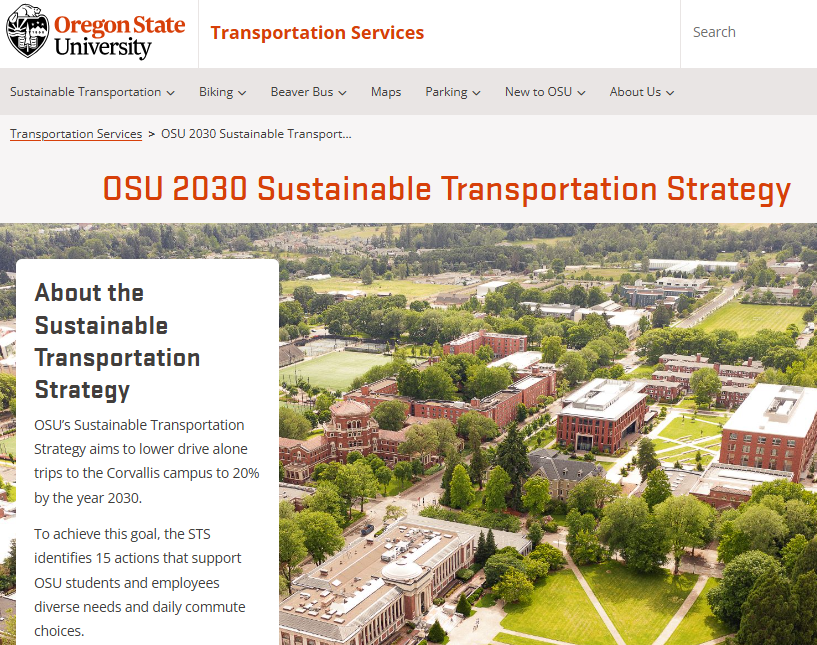
Oregon State University Sustainable Transportation Strategy

A strategy that became an institutional goal.

OSU’s Sustainable Transportation Strategy is public, goal-driven, and implementation-oriented. It sets a 2030 target to reduce drive-alone commute trips to the Corvallis campus to 20%, supported by actions that expand flexible, affordable, and sustainable travel choices.

Why it matters. A good strategy creates a shared institutional target and gives departments a way to align decisions over time.

What this shows. Mobility work has to connect transportation, parking, sustainability, campus growth, and daily operations into a framework people can keep using.

Visit site →
Princeton Campus Mobility Framework on the university transportation site

Princeton Campus Mobility Framework

A framework that became part of campus operations.

Princeton’s Campus Mobility Framework is embedded in the University’s Transportation and Parking Services site. The public page presents guiding principles for how Princeton plans movement around campus today and into the future.

Why it matters. The most useful frameworks become institutional reference points. They help staff, leaders, and stakeholders make consistent decisions as conditions change.

What this shows. A campus mobility framework should not sit on a shelf. It should become a shared way to evaluate projects, communicate tradeoffs, and guide implementation.

Visit site →

The point

Our goal is not for institutions to admire the plan. It is for them to keep using the machine.

How an engagement actually runs is on How we work. The instruments themselves are on Tools.